

A recent reddit post says it all:
“We’ve got too many boards, the boundaries are fuzzy, some things have probably never actually worked as written and been ignored, and running an organization is a bigger deal than it used to be. As chair of the congregation, it falls to me to git er done.”
As a church consultant, I have heard one version of this story told in large to small churches that are using the traditional governance model of boards and committees. As churches get larger, they naturally get more complicated and that makes alignment and mission drift big issues that must be addressed. Smaller churches trying to live out the wrong governance model can find themselves equally frustrated and ineffective.
I have found four questions helpful for deciding whether you should change or modify your current governance structure.
Question #1: Does it Advance the Mission?
The first question a church should consider in discerning a model of governance would be: what does your church board’s governance need to achieve for the mission of the church to advance?
I recently was working with a church to discern their readiness to change their governance model. Three elderly ladies sat directly in front of me as I made my presentation to the congregational gathering. “Why should we change our model,” one vocal lady expressed, “We like it the way it is and it’s working just fine.” The other two ladies at her table nodded enthusiastically.
“Well,” I queried, “Your church is in decline for the last several years numerically. Your struggling financially and you want to do more in the community but you do not have the people or money resources. So, help me understand how it is working so fine that if there were a better way to do things you would not be interested.”
Needless to say, I did not make any friends at that table. This question is key because it forces you to decide what the congregation’s mission will be. If the goal is being comfortable then the church mentioned earlier should keep its current structure. If they do not like the way their mission is failing then perhaps, they should consider changing their structure.
Question #2: Does the Structure Support the Values of the Congregation?
This may seem like a no-brainier…of course it supports our values. But you need to take a deeper dive into the congregation’s values. If you value being open, welcoming, friendly to visitors how does the structure help make that possible. Is anyone asking how you are doing on this value or do you just take it for granted?
What about making disciples? If this is a value how is your structure making this happen? The only thing that happens without planning and structure is entropy.
If a value of your church is being involved in the community are you making that happen? Who is evaluating that and when? How do you measure effectiveness in your activities? Is effectiveness a value or just keeping people busy?
Is your major value getting people on a committee or is it identifying their gifts and getting them in a ministry?
All of these are value questions that your structure should be reinforcing and developing.
Question #3: What Drives Your Church Leadership or Management?
The Reddit post mentioned earlier outlines an organization struggling to keep its committees and teams working in the same direction. The traditional church model is reasonably good at managing what you have done in the past but it can become an octopus of arms moving in lots of directions without any clear guidance or purpose. Administrative Board meetings become reports of events past instead of asking the hard strategic questions of effectiveness and purpose.
Single Board Governance is a model of doing church that merges the technical and adaptive changes so that the conversations we have at church meetings are no longer just about reporting on what we have done, deciding on paint color, or going through the painstaking process of getting quotes on a new roof. By adopting a single board model, the board meetings discuss questions like, “How are we doing at making disciples? What new relationships have we made? How are we making progress on our goals?” Single Board Governance makes way for a church to allow the mission and vision, rather than buildings and budgets, to drive everything it does.
What we often call leadership in churches is often simply management. We need managers but we are sorely lacking leadership that provides direction, vision, mission, and purpose for congregations.
Is your church more focused on management of the current reality or leadership into a preferred future for the congregation and community it is there to serve?
If you would like to explore the governance possibilities for your congregation further, please call me or contact me. I would love to explore the options with you and your team.
Bio & Book Info
Ron Brooks is a certified church consultant and personal/professional coach. He is currently the Michigan Conference SAS (Simplified Accountable Structure) Coordinator. You may want to check out his book coming out in September called The Turnaround Leader’s Playbook which focuses on church leadership in our changing environment. If you want early access to the book contact Ron at revbrooks.ron@gmail.com or call 269.779-6131.
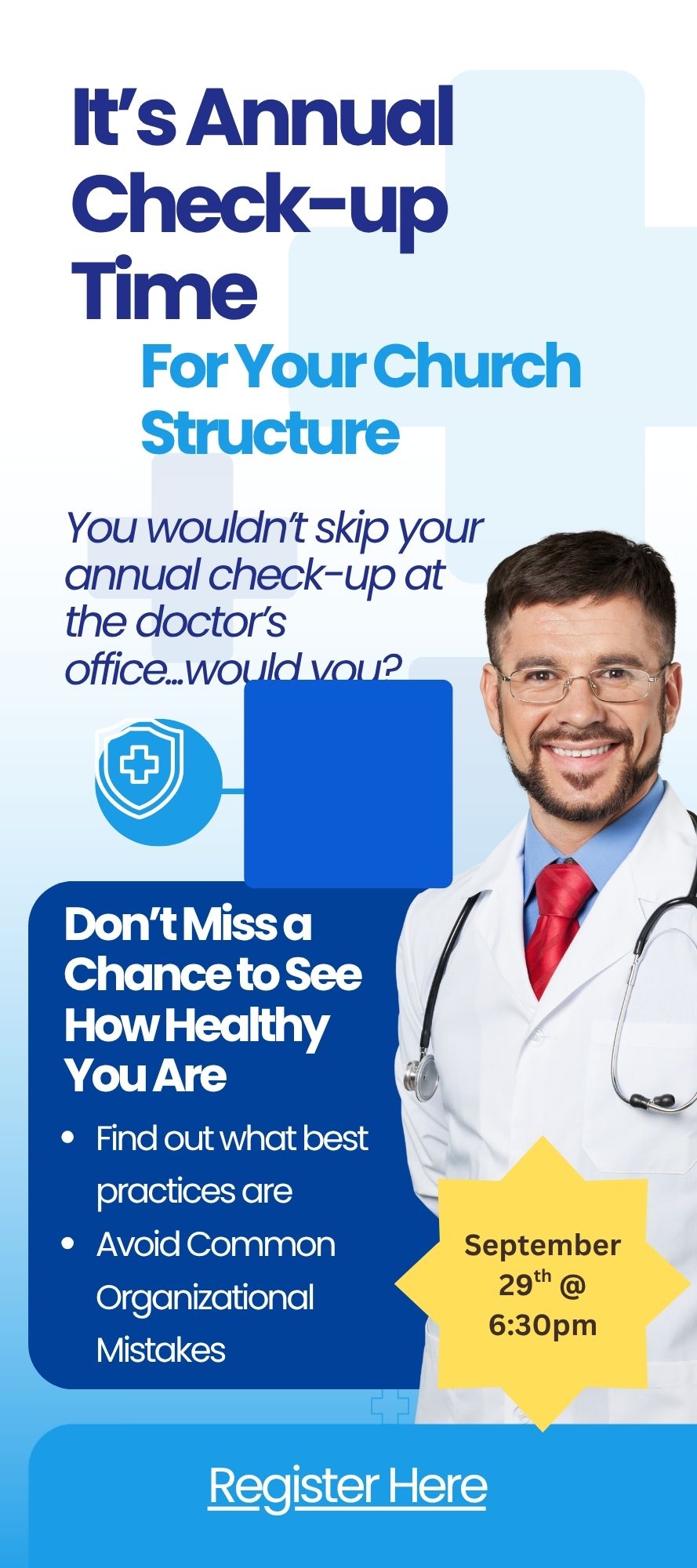
Your Link to register for Ron’s latest Church Health Webinar
https://us02web.zoom.us/meeting/register/fy1P6IOuRSapG3E9IgnCVg
Stay in Touch!
Thanks for taking the time to read the blog post. If you like what you read and would like to see more please subscribe.
If you would like to explore personal coaching or organizational consulting please contact me.